Anderson, Indiana Roofing Contractor Services
What This Page Covers
- Residential roof replacement, roof repair, siding, seamless gutters, and new construction roofing in Anderson, Indiana.
- How vinyl siding protects your home, how long it may last, and how to maintain it.
- Why gutter cleaning is important for preventing water damage to your roof, siding, and foundation.
- When to schedule a roof inspection and which roofing components should be evaluated.
- Practical answers to common questions about storm damage, roofing costs, warranties, and roofing materials.
Why This Matters
Anderson homeowners experience a wide range of weather conditions, from hot, humid summers and severe thunderstorms to freezing winter temperatures, snow, and ice.
These seasonal changes can gradually affect asphalt shingles, flashing, siding, and gutter systems. Wind can loosen shingles, heavy rainfall can expose drainage problems, and repeated freezing and thawing can contribute to deterioration around vulnerable roof areas.
Whether you own an established home near downtown Anderson, a residential property in the city’s west-side neighborhoods, or a newer house elsewhere in Madison County, understanding your roofing system’s condition can help you make informed maintenance and replacement decisions.
Key Actions You Can Take
- Check your roof from the ground after major storms for missing shingles, fallen branches, or visible damage.
- Watch for water stains, damp attic insulation, or recurring leaks that may indicate roofing problems.
- Keep gutters and downspouts clear so rainwater and melting snow can drain away from your home.
- Inspect siding for cracks, warping, loose panels, or signs of moisture intrusion.
- Arrange a professional roof assessment if you notice persistent leaks, storm damage, or widespread deterioration.
- Contact IRONCLAD Roofing at 765-789-0298 to request a free roofing estimate.
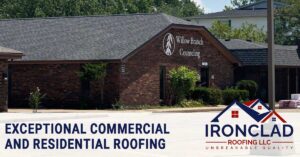
IRONCLAD Roofing provides residential roofing and exterior improvement services throughout Anderson, Indiana, and surrounding Madison County communities.
Anderson’s housing includes historic properties near the downtown area, established residential neighborhoods, and newer construction. These homes can have different roofing materials, roof slopes, ventilation systems, and maintenance requirements.
A house with aging asphalt shingles may need a complete roof replacement, while another property may only require flashing repairs, replacement shingles, or improvements to its gutter system.
Our team helps homeowners identify roofing concerns, evaluate available solutions, and select materials appropriate for their home’s design and condition.
From roof leaks after a summer thunderstorm to deteriorating shingles following years of Indiana weather, IRONCLAD Roofing provides practical recommendations and professional roofing services.
Contact IRONCLAD Roofing to discuss your roofing project in Anderson.
Living in Anderson, IN
Anderson is the county seat of Madison County and a community with a distinctive industrial and architectural history.
The city played an important role in Indiana’s manufacturing development, including the growth of automotive-related industries during the twentieth century.
Today, reminders of that history can be found throughout the community, particularly in its established neighborhoods and downtown architecture.
One of Anderson’s best-known landmarks is the historic Paramount Theatre, which opened in 1929 and remains an important cultural destination in the downtown area.
The community is also associated with Mounds State Park, located near Anderson along the White River, where visitors can explore preserved earthworks and natural landscapes.
These local features reflect the area’s combination of historic development, residential neighborhoods, and access to outdoor recreation.
For homeowners, Anderson’s varied housing stock means roofing needs can differ considerably from one property to another.
Older homes may require careful examination of existing decking, flashing, roof ventilation, and previous repairs.
Newer residential properties may benefit from preventive maintenance, inspections after severe storms, and timely repairs to protect the original roofing installation.
Madison County’s seasonal weather adds another consideration. Heavy rain, wind, summer heat, and winter freezing conditions can place stress on roofing and exterior materials throughout the year.
IRONCLAD Roofing serves Anderson homeowners with residential roofing solutions tailored to the condition, design, and maintenance needs of each property.
Explore our Areas We Serve directory for other Madison County communities, including Alexandria and Chesterfield.
For concerns involving leaks or damaged shingles, learn more about our residential roof repair services.
Why So Many Anderson Roofs May Be Due for Replacement
Anderson’s housing stock skews older, which changes what a roof replacement involves. According to the U.S. Census Bureau’s 2020–2024 American Community Survey:
- The median year Anderson homes were built is 1961.
- About 75% of Anderson’s 27,483 housing units were built before 1980.
- About 92% were built before 2000.
- Nearly 1 in 4 homes (23.6%) were built in 1939 or earlier.
- Only about 2% were built in 2010 or later.
- 69.5% of Anderson homes are single-family detached houses.
For older homes, a replacement is a chance to inspect the roof decking, fix the ventilation, and ensure the new roof meets today’s code. The median value of an owner-occupied home in Anderson is $119,000 (Census ACS 2020–2024), so a sound roof protects a large share of an Anderson home’s value.
Your Trusted Partner for Residential Roofing, Remodeling, and More in Anderson
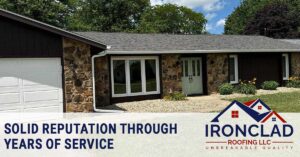
IRONCLAD Roofing provides residential roofing and exterior improvement services to homeowners throughout Anderson and surrounding Madison County communities.
Whether you need repairs following a severe thunderstorm, replacement of aging shingles, new seamless gutters, or siding improvements, our team can help evaluate the condition of your home and explain the available options.
We understand that roofing projects represent a significant investment. Our approach focuses on identifying the source of roofing concerns, recommending suitable materials, and helping homeowners make informed decisions.
From established neighborhoods near downtown Anderson to residential properties elsewhere in the city, every home has different roofing and exterior maintenance requirements.
Our services include:
- Residential roof replacement
- Residential roof repair
- Siding installation and replacement
- Seamless gutter installation
- New construction roofing
If your roof is leaking, showing signs of deterioration, or approaching the end of its expected service life, a professional assessment can help determine the next step.
Residential Roof Replacement
An aging or severely damaged roof can leave your home vulnerable to moisture intrusion, insulation damage, and deterioration of underlying building materials.
IRONCLAD Roofing provides residential roof replacement services for Anderson homeowners whose roofs have reached the end of their useful life or sustained extensive damage.
The replacement process generally involves assessing the existing roofing system, removing deteriorated materials as needed, examining accessible roof decking, and installing a new roofing system according to the selected manufacturer’s requirements.
For asphalt shingle roofs, proper underlayment, flashing, ventilation, and fastening are important to long-term performance.
Homeowners should also consider roof slope, material warranties, and how the new roofing materials will complement the property’s exterior.
Residential Roof Repair
Not every roofing problem requires a complete replacement.
Common issues affecting Anderson homes include missing shingles, deteriorated flashing, leaking pipe boots, damaged roof vents, and water intrusion around chimneys.
IRONCLAD Roofing offers residential roof repair services to address localized damage when the remaining roofing system is in suitable condition.
A professional assessment can help determine whether targeted repairs are likely to provide lasting protection or whether more extensive work is necessary.
For example, replacing several wind-damaged shingles may be appropriate on an otherwise sound roof, while widespread deterioration may justify complete replacement.
Siding
Siding is an important protective layer that helps shield exterior walls from rain, wind, and moisture.
IRONCLAD Roofing offers siding installation and replacement services for Anderson homes with aging, damaged, or outdated exterior materials.
Available siding options include vinyl, LP, Hardie, and synthetic shake products.
When choosing siding, homeowners should consider maintenance requirements, durability, appearance, and compatibility with the home’s existing exterior.
Proper installation around windows, doors, roof intersections, and other openings helps reduce the risk of water entering the wall assembly.
Seamless Gutters

Anderson experiences heavy rainfall during thunderstorms and seasonal debris accumulation from surrounding trees.
When gutters become clogged or damaged, water may overflow near the roofline and collect around the foundation.
IRONCLAD Roofing provides seamless gutter installation services designed to help move rainwater away from vulnerable areas of the home.
Unlike traditional sectional gutters, seamless systems have fewer joints along their straight runs, reducing potential leak points.
Proper gutter sizing, slope, downspout placement, and maintenance remain essential to effective drainage.
New Construction Roofing
Anderson experiences heavy rainfall during thunderstorms and seasonal debris accumulation from surrounding trees.
When gutters become clogged or damaged, water may overflow near the roofline and collect around the foundation.
IRONCLAD Roofing provides seamless gutter installation services designed to help move rainwater away from vulnerable areas of the home.
Unlike traditional sectional gutters, seamless systems have fewer joints along their straight runs, reducing potential leak points.
Proper gutter sizing, slope, downspout placement, and maintenance remain essential to effective drainage.
What Is Vinyl Siding?

Vinyl siding is a residential exterior cladding material manufactured primarily from polyvinyl chloride, commonly called PVC.
It is available in a variety of colors, profiles, and textures, including products designed to resemble traditional wood siding.
For Anderson homeowners, vinyl siding can offer a relatively low-maintenance exterior option that does not require routine painting.
However, siding is only one component of a properly constructed exterior wall. Weather-resistant barriers, flashing, trim, and drainage details also contribute to moisture protection.
Homeowners considering new siding installation should evaluate both the appearance of the material and the condition of the wall beneath it.
How Long It Lasts
Vinyl siding can often provide approximately 20 to 40 years of service, although actual lifespan varies significantly depending on product quality, installation, weather exposure, and maintenance.
Anderson’s temperature changes can cause exterior materials to expand and contract throughout the year.
Proper fastening and allowance for thermal movement are especially important for vinyl siding because panels must be able to expand and contract without buckling.
Sun exposure, storm damage, and moisture problems behind the siding can also affect performance.
Signs that siding may need attention include cracking, loose panels, warping, recurring moisture stains, or deterioration around openings.
How To Clean
Regular cleaning helps remove dirt, pollen, mildew, and other residue that accumulates on siding.
Many Anderson homeowners can clean accessible vinyl siding using a garden hose, a soft-bristled brush, and a mild cleaning solution approved by the siding manufacturer.
Begin by rinsing loose debris from the surface. Gently clean stained areas without forcing water behind overlapping panels or into window and door openings.
Avoid abrasive tools and high-pressure washing methods that could damage the siding or drive water behind it.
Rinse thoroughly and inspect the exterior for cracks, loose panels, or damaged trim while cleaning.
For additional guidance, see Bob Vila’s vinyl siding cleaning recommendations.
Why Gutters Need Cleaning
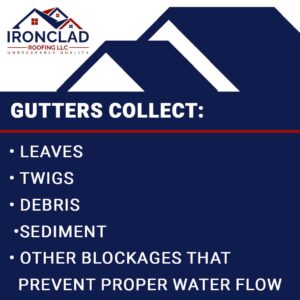
Gutters help control the movement of rainwater from your roof to designated drainage areas.
Throughout Anderson, falling leaves, twigs, shingle granules, and other debris can accumulate in gutter channels and downspouts.
When this material blocks drainage, water may overflow along the roof edge or collect near the foundation.
Homes with mature trees nearby may require more frequent gutter maintenance, particularly during autumn and after strong storms.
Routine cleaning can help protect fascia boards, siding, landscaping, and other exterior components from avoidable water exposure.
What Can Happen if You Don’t
Foundation and Drainage Problems
When gutters overflow, water may collect near the home’s foundation instead of being directed away through downspouts.
Repeated saturation can contribute to basement moisture, soil erosion, and drainage problems, particularly where grading already directs water toward the house.
Siding and Fascia Damage
Water spilling over gutter edges can run down siding and behind fascia boards.
Over time, repeated moisture exposure may contribute to staining, peeling paint, wood deterioration, or damage to other exterior materials.
Winter Ice Problems
Blocked gutters can contribute to water accumulation and freezing near roof edges.
However, ice dams are primarily associated with roof temperature differences caused by factors such as heat loss, insulation deficiencies, air leakage, and ventilation conditions.
Cleaning gutters supports proper drainage but does not guarantee that ice dams will be prevented.
Damaged Gutter Attachments
Wet leaves, standing water, and accumulated ice add weight to gutter systems.
Excessive loads may cause gutters to sag, separate from fascia boards, or develop leaks at joints and connections.
If your existing system repeatedly overflows or leaks, consider whether seamless gutter replacement would improve drainage.
How To Clean Them
Foundation and Drainage Problems
When gutters overflow, water may collect near the home’s foundation instead of being directed away through downspouts.
Repeated saturation can contribute to basement moisture, soil erosion, and drainage problems, particularly where grading already directs water toward the house.
Siding and Fascia Damage
Water spilling over gutter edges can run down siding and behind fascia boards.
Over time, repeated moisture exposure may contribute to staining, peeling paint, wood deterioration, or damage to other exterior materials.
Winter Ice Problems
Blocked gutters can contribute to water accumulation and freezing near roof edges.
However, ice dams are primarily associated with roof temperature differences caused by factors such as heat loss, insulation deficiencies, air leakage, and ventilation conditions.
Cleaning gutters supports proper drainage but does not guarantee that ice dams will be prevented.
Damaged Gutter Attachments
Wet leaves, standing water, and accumulated ice add weight to gutter systems.
Excessive loads may cause gutters to sag, separate from fascia boards, or develop leaks at joints and connections.
If your existing system repeatedly overflows or leaks, consider whether seamless gutter replacement would improve drainage.
When To Get Your Roof Inspected

A roof inspection helps identify deterioration, storm damage, and potential leak sources before problems become more extensive.
Anderson homeowners should consider professional inspections when their roof is aging, after significant weather events, or whenever warning signs appear.
A routine inspection may also be useful before selling a home or planning major exterior improvements.
Seasonal inspections can be beneficial, but the appropriate frequency depends on the roof’s age, condition, material, and exposure.
After Severe Weather
High winds and hail can damage roofing materials even when the roof appears mostly intact from the ground.
Missing shingles, damaged flashing, and fallen branches are reasons to arrange an assessment.
When Leaks Appear
Ceiling stains, wet attic insulation, peeling interior paint, or damp spots near chimneys may indicate water intrusion.
The visible stain may not be directly beneath the roof opening because water can travel along framing and other surfaces.
When the Roof Is Aging
As shingles deteriorate, they may become brittle, lose granules, curl, or develop cracks.
A professional evaluation can help determine whether continued maintenance is appropriate or replacement should be planned.
What Is Checked During a Roof Inspection
A roofing inspection generally includes evaluation of several important components.
Roofing Materials
The inspector examines shingles for cracking, curling, missing sections, unusual granule loss, or other signs of deterioration.
Flashing and Penetrations
Flashing around chimneys, plumbing vents, skylights, roof valleys, and wall intersections is checked for visible damage or potential leak paths.
Roof Decking and Structural Conditions
Accessible areas may be examined for sagging, moisture damage, or signs of deterioration.
Suspected structural problems may require additional evaluation by a qualified structural professional.
Ventilation and Attic Conditions
Where accessible, attic spaces may be evaluated for moisture accumulation, inadequate airflow, or insulation concerns that could affect roofing performance.
Gutters and Drainage
Gutters, downspouts, and roof drainage paths may be checked for visible blockages, separation, or damage.
After the assessment, homeowners should receive an explanation of the findings and recommendations appropriate to the roof’s condition.
For concerns involving leaks or damaged shingles, learn more about our residential roof repair services.
Roofing Materials
The inspector examines shingles for cracking, curling, missing sections, unusual granule loss, or other signs of deterioration.
Flashing and Penetrations
Flashing around chimneys, plumbing vents, skylights, roof valleys, and wall intersections is checked for visible damage or potential leak paths.
Roof Decking and Structural Conditions
Accessible areas may be examined for sagging, moisture damage, or signs of deterioration.
Suspected structural problems may require additional evaluation by a qualified structural professional.
Ventilation and Attic Conditions
Where accessible, attic spaces may be evaluated for moisture accumulation, inadequate airflow, or insulation concerns that could affect roofing performance.
Gutters and Drainage
Gutters, downspouts, and roof drainage paths may be checked for visible blockages, separation, or damage.
After the assessment, homeowners should receive an explanation of the findings and recommendations appropriate to the roof’s condition.
Common Roofing Service FAQs for Anderson, Indiana
How much does a full roof replacement cost in Anderson, Indiana in 2026?
Roof replacement costs vary depending on the home’s roof size, pitch, materials, installation complexity, and the condition of the existing roof decking.
Additional work involving flashing, ventilation, structural repairs, or gutters can also affect the total price.
Because every home is different, a generalized price range may not accurately represent your project.
IRONCLAD Roofing offers free estimates so Anderson homeowners can receive pricing based on their property’s actual requirements.
Will my homeowners insurance cover roof damage from hail or wind in Anderson?
Homeowners insurance may cover sudden roof damage caused by hail, wind, or other events included in the policy.
Coverage depends on the specific policy terms, exclusions, deductible, roof condition, and cause of damage.
Damage resulting from ordinary wear, aging, or deferred maintenance is generally treated differently from covered storm damage.
Homeowners should document visible damage safely, review their policy, and contact their insurer to understand the claims process.
How long does a roof last in Indiana’s climate with snow, storms, and humidity?
The lifespan of a roof depends on its materials, installation quality, ventilation, maintenance, and exposure to severe weather.
Architectural asphalt shingles may provide several decades of service under suitable conditions, but actual performance varies by product and property.
Routine inspections, prompt repairs, and proper attic ventilation can help reduce avoidable deterioration.
What are the most common signs of storm damage on roofs in Anderson, IN?
Common warning signs include missing or lifted shingles, damaged flashing, fallen branches, dented metal roof components, and water stains inside the home.
Granules accumulating in gutters may also indicate shingle wear, although granule loss can occur for reasons other than storm damage.
After severe weather, a professional assessment can help distinguish storm-related damage from normal aging.
How quickly can a roofing contractor respond after a severe storm in Anderson?
Response times depend on weather conditions, contractor availability, the extent of regional storm damage, and the urgency of the problem.
Homeowners with active leaks should contact a roofing contractor promptly to discuss temporary protection and inspection options.
IRONCLAD Roofing can explain current scheduling availability when you call 765-789-0298.
What roofing materials perform best in Indiana’s freeze-thaw cycles?
Architectural asphalt shingles are commonly used on Indiana homes because they offer a balance of durability, appearance, and cost.
Metal roofing systems can also provide long service lives when appropriately designed and installed.
The best material depends on roof slope, structural considerations, wind exposure, budget, and the manufacturer’s installation requirements.
Proper underlayment, flashing, ventilation, and water-management details are important regardless of the finished roofing material.
Do I need a permit for roof replacement in Anderson, Indiana?
Permit requirements depend on the scope of work and the building regulations currently applicable to the property.
A straightforward roofing-material replacement may be treated differently from work involving structural alterations or extensive decking repairs.
Before beginning a project, confirm requirements with the appropriate Anderson or Madison County building authority.
Ask your contractor who will be responsible for obtaining any necessary permits and arranging inspections.
Can a new roof be installed over an old roof?
Installing new shingles over an existing roofing layer is sometimes called a roof overlay.
Whether an overlay is permitted depends on the existing roofing system, roof condition, manufacturer instructions, and applicable building codes.
Some situations require removal of existing materials, particularly when the roof has multiple layers, damaged decking, moisture problems, or unsuitable roofing materials.
Removing the old roof also allows the underlying decking to be examined more thoroughly.
For many homeowners, a complete tear-off and replacement provides a better opportunity to identify hidden problems before installing the new roof.
Learn more about our residential roof replacement services.
What kinds of warranties do you offer?
IRONCLAD Roofing advertises a 10-year workmanship guarantee, along with applicable manufacturer warranty coverage for qualifying roofing products.
The specific terms, limitations, exclusions, and registration requirements should be reviewed before installation.
Manufacturer warranties generally cover defined product-related issues, while workmanship warranties address covered installation-related problems.
Homeowners should request written warranty documentation explaining what is included and how claims are handled.
Learn more about our company on the About IRONCLAD Roofing page.
What roof color deflects heat best?

Light-colored roofing materials generally absorb less solar heat than darker materials with otherwise similar properties.
However, actual solar reflectance depends on the product’s surface characteristics, not just its visible color.
Reflective roofing products may help reduce roof surface temperatures, but energy performance also depends on attic insulation, ventilation, air sealing, and the overall building design.
Anderson homeowners should balance energy efficiency with material durability, neighborhood requirements, and the appearance of their home.
Can I replace siding myself?
Some homeowners have the experience and equipment needed to perform limited siding repairs.
However, complete siding replacement requires careful attention to measurements, fastening, flashing, weather-resistant barriers, and details around windows and doors.
Improper installation can allow water behind the siding, potentially damaging sheathing, insulation, and other wall components.
Professional installation is often the more practical choice for extensive siding replacement, especially on multi-story homes or properties with complicated exterior details.
IRONCLAD Roofing provides siding installation and replacement services for homeowners evaluating exterior improvements.
My roofer was up on the roof with a grinder, cutting a line into the brick wall right above the shingles. Dust everywhere. Is he damaging my house?
No. If he’s cutting along the mortar line, he’s doing one of the most important parts of the job, and doing it the right way. That cut is your roof’s best defense against leaks. That’s what we call a reglet.
It’s a narrow groove, roughly half an inch to an inch deep, ground into a mortar joint a few inches above the roof surface. He uses an angle grinder with a masonry blade and follows the mortar, not the brick, so the wall isn’t weakened and the groove can be repointed cleanly.
The groove holds the top edge of the counter flashing. That’s a strip of metal that folds down over the step flashing woven into your shingles. Once the counter flashing is set into the reglet, he seals the joint with mortar or a masonry-grade sealant.
Think of it as two layers working together:
- Step flashing sits under the shingles and turns up the wall, so roof water can’t get under the shingles.
- Counter flashing comes out of the wall and laps down over the step flashing, so water running down the brick can’t get behind it.
Why it matters
The line where a roof meets a brick wall or chimney is one of the most common places for roof leaks. Brick is porous, and rain that hits the wall runs straight down it. Without counter flashing tucked into the masonry, that water finds its way behind the step flashing, into the roof deck, and eventually into your ceiling or walls.
Many crews take a shortcut: surface-mounted flashing. They glue or caulk a metal strip flat against the brick face. It looks fine on day one. But caulk shrinks and cracks with heat, cold, and sun, and once that bead fails, water runs right behind the metal. Homeowners often see leaks within a few years and never know why.
Reglet-set counter flashing doesn’t depend on a bead of caulk to stay watertight. The metal sits inside the wall itself, so water running down the brick is directed over the flashing and onto the shingles. It takes more time and skill, but it’s the method masonry and roofing standards recommend, and it lasts as long as the roof.
What to ask your roofer
If your roof meets a brick wall or chimney, ask these before you sign:
- Will the counter flashing be cut into the mortar, or caulked to the surface? You want cut in.
- Will you replace the step flashing too, or reuse the old pieces? New shingles over tired flashing is a common source of leaks.
- How will you control the dust? Cutting mortar releases silica dust. A professional crew uses a vacuum shroud on the grinder and wears respirators.
So if you see your roofer grinding into the brick, that’s not damage. It’s a sign the crew is taking the extra step that keeps water out for the life of your roof.
Contact IRONCLAD Roofing at 765-789-0298 to request a free roofing estimate in Anderson, Indiana.
You can also schedule a consultation through our contact page or explore our roofing project gallery to see examples of our work.
Recent Roof Replacement Projects in Anderson
 | Matt and his team did an excellent job. Every employee I interacted with was professional and knowledgeable about their work. The work was completed promptly, and the quality is terrific. I would recommend IRONCLAD services to anyone with roofing needs in Anderson. – Joshua |
 | Ironclad Roofing was excellent. Their quote was right in line with what I was expecting. They stuck to the schedule they anticipated and actually got to me a week earlier. And though the day they did the work was exceptionally hot and humid, the crew worked all day and got finished before dark, which was amazing to me given the weather here in Anderson. I highly recommend Ironclad Roofing. – John |
 | My experience with Ironclad was the best! I can’t stress enough how wonderful Austin is! The whole crew worked amazingly. My yard was immaculate when they left! I definitely give them 10 stars! – Sandra |